
Building vocabulary doesn’t have to feel repetitive or boring. Crossword puzzles give students a fun way to practice new words while staying engaged.
Instead of memorizing lists, students actively think about each word. They read clues, make connections, and apply what they know. As a result, learning sticks longer and feels more meaningful.
Plus, crossword puzzles keep students motivated. Because they feel like a game, students stay focused and actually want to finish the activity.

Are Crossword Puzzles Too Hard for Young Students?
It might seem like crossword puzzles are too challenging for first and second graders. However, students are often capable of much more than we expect.
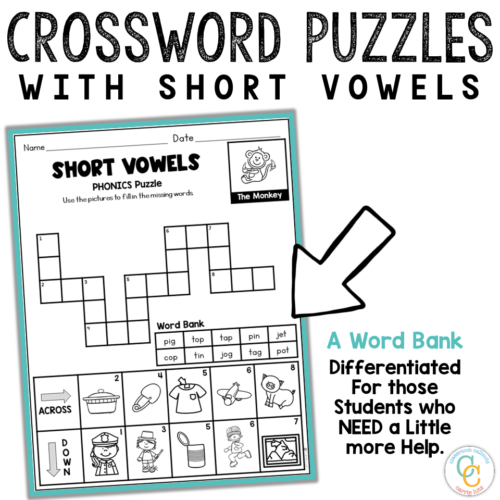
With the right support, young learners can successfully complete crossword puzzles and enjoy the process. For example, using simple clues, familiar vocabulary, and word banks makes the activity much more approachable.
In addition, students do not need to complete the entire puzzle perfectly on their own. You can model the process first, then allow students to try with a partner or small group. Because of this, they build confidence as they go.
Many students actually enjoy the challenge. They feel successful when they figure out a word and see it fit into the puzzle. As a result, they stay engaged and motivated.
If a student gets stuck, that’s part of the learning process. They can reread the clue, look for letter hints, or use classroom resources. These strategies help students develop independence and problem-solving skills.
When given the opportunity, young students often surprise us. Crossword puzzles give them a chance to stretch their thinking in a fun and supportive way.
Benefits of Crossword Puzzles Vocabulary
Crossword puzzles help students grow their vocabulary in a natural way. As they work through each clue, they are exposed to new words and meanings.
For example, students begin to recognize patterns in language. They also learn how words connect to each other. Because of this, their speaking and writing become more precise.
Another benefit is that students build confidence. When they successfully complete a puzzle, they feel proud of their learning.
How Crossword Puzzles Build Academic Vocabulary
When kids do crossword puzzles, they practice problem-solving and increase their vocabulary. When they find words for the puzzle, they’re exposed to academic vocabulary they may know or not know. This helps them learn new words and understand their meanings. With each new puzzle, they learn and remember new words, giving them more words to use when they talk and write. This helps them build a strong academic vocabulary.
Crossword puzzles can help kids learn more words and expressions. Doing them also teaches children how words can be used together and lets them spot patterns. This helps them understand more about language, not just memorizing it. Kids can also gain confidence in their abilities to express themselves. Crossword puzzles can also help with independent learning in lots of ways.
Promoting Independent Learning
Crossword puzzles are perfect for independent work. Students can solve them on their own while building important skills.
For example, they may look back at notes or use classroom resources to find answers. Because of this, they learn how to take ownership of their learning.
In addition, students develop persistence. If they get stuck, they try different strategies until they find the answer.
 |
 |
 |
Building Critical and Creative Thinking
Crossword puzzles push students to think in new ways. They must analyze clues, make connections, and test their ideas.
At the same time, puzzles encourage creativity. Students often think of multiple possible answers before finding the correct one.
Because of this, they become more flexible thinkers. These skills carry over into reading, writing, and other subjects.
 |
 |
 |
Using Crossword Puzzles Across Subjects
One of the best things about crossword puzzles is their flexibility. You can use them in any subject.
For example:
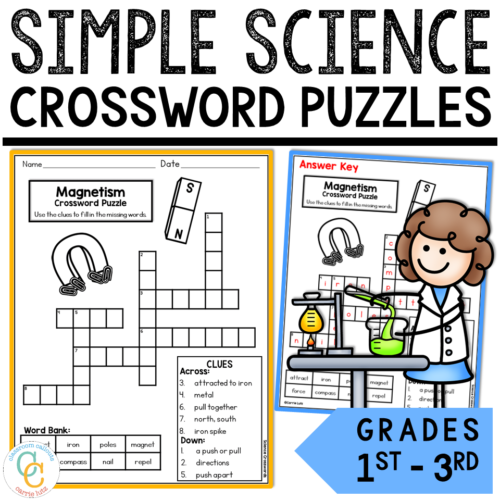
- In science, students practice vocabulary like habitats or energy
- In social studies, they review people, places, and events
- In reading, they build comprehension and word knowledge
Because of this, puzzles help students make connections across subjects.
How to Use Crossword Puzzles in the Classroom
Crossword puzzles fit easily into your daily routine. They require little prep and work in many settings.
You can use them for:
- Morning work
- Literacy centers
- Early finishers
- Sub plans
- Small group review
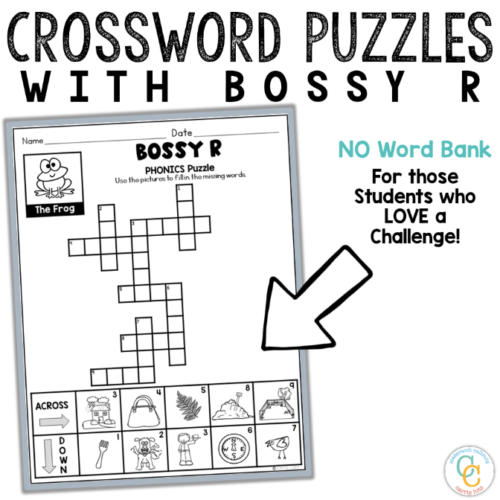
In addition, you can differentiate by adding word banks or increasing difficulty.
Final Thoughts
Crossword puzzles are more than just a fun activity. They help students build vocabulary, think critically, and learn independently.
Because they are engaging and easy to use, they are a great addition to any classroom.
If you want a simple way to make vocabulary practice more effective, crossword puzzles are a strong choice.
More Resources with Crossword Puzzles
 |
 |
 |
 |
Pin it to view later!

More from this Blog

Leave a Reply